

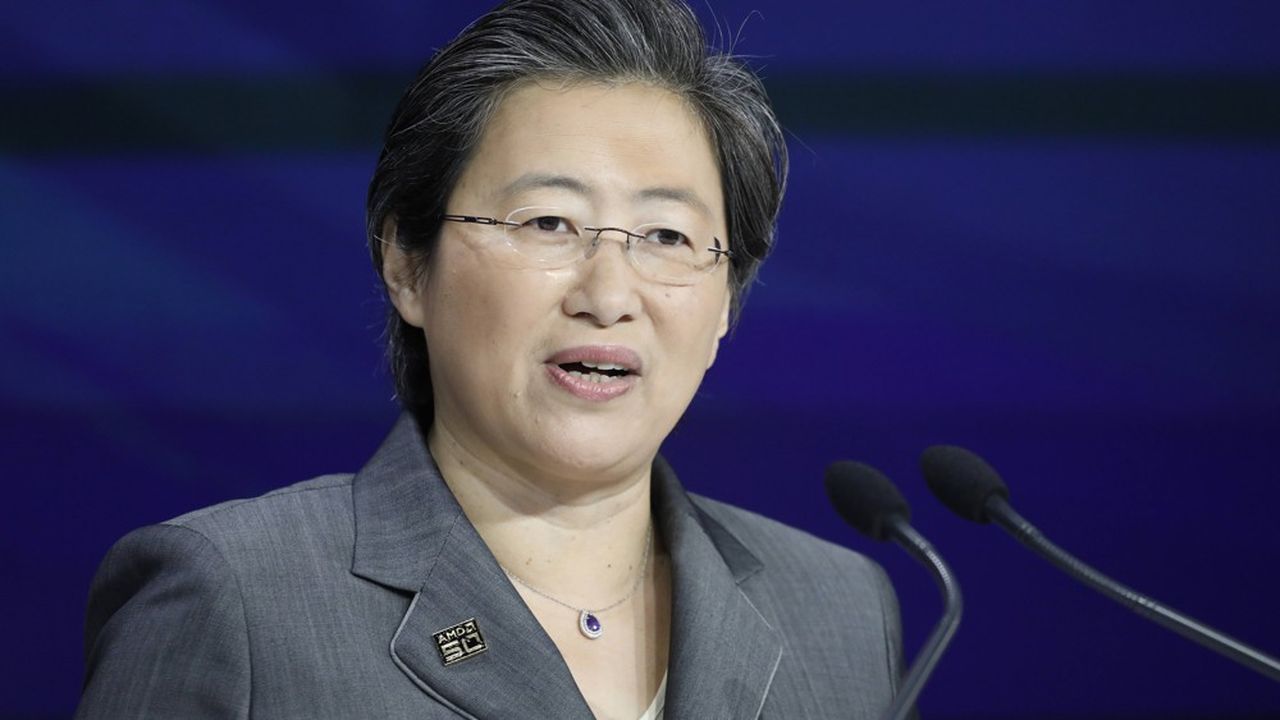
History was made in the boardrooms of corporate America when Lisa Su, chief executive officer of Advanced Micro Devices (AMD), became the first woman to top Equilar's annual ranking of the highest-paid CEOs in the S&P 500. The 2020 survey, compiled from regulatory filings and a widely watched executive pay study, revealed that Su earned $58.5 million in 2019 — more than four times her compensation from the previous year. The milestone shattered a long-standing glass ceiling in the upper echelons of American business and drew fresh attention to the persistent gender gap in executive compensation.
The bulk of Su's pay package came in the form of a one-time award of performance-based restricted stock units valued at $53 million. Her base salary was $1 million, her cash bonus was $1.2 million, and she received $3 million in stock options. The exceptional nature of the compensation reflects the board's confidence in her leadership and the company's remarkable turnaround under her guidance. While the figure may seem staggering, it is important to note that the vast majority of her compensation is tied to performance milestones that align with shareholder value creation.
Equilar's ranking of S&P 500 chief executives is one of the most closely watched benchmarks for executive pay in the United States. For decades, the list has been dominated by male leaders, often from traditional industries such as finance, energy, and technology. Lisa Su's ascension to the top spot is particularly striking because it is not just a symbolic victory for gender equality but also a reflection of her tangible achievements at AMD. The fact that a woman of Taiwanese descent leads the ranking underscores the shifting dynamics of global business.
Born in Taiwan and raised in the United States, Lisa Su demonstrated an early aptitude for mathematics and science. She earned a bachelor's degree in electrical engineering from the Massachusetts Institute of Technology and later completed her master's and doctoral degrees at the same institution. Her academic foundation in semiconductor technology would prove invaluable in her later career, as she became one of the most respected engineers and executives in the tech industry.
Before joining AMD, Su held leadership roles at Texas Instruments and IBM. At IBM, she played a key role in developing new semiconductor materials and manufacturing processes that helped extend Moore's Law. She later served as senior vice president at Freescale Semiconductor, where she was responsible for the company's networking and multimedia solutions. These experiences gave her a rare combination of technical depth and business acumen, setting the stage for her appointment as AMD's CEO in 2014.
When Su took the helm at AMD, the company was in dire straits. The personal computer market was shrinking, and AMD had lost significant market share to rival Intel. The company's balance sheet was weighed down by debt, and its processor architecture was widely seen as uncompetitive. Many industry analysts doubted whether AMD could survive as an independent company. Su immediately set out to streamline operations, focus on high-performance computing, and rebuild relationships with key customers and partners.
Her most significant strategic move was betting on a new chip architecture known as Zen. The Zen design was developed with the goal of delivering competitive performance per watt while remaining affordable. Under Su's leadership, AMD launched the Ryzen series for desktop PCs and the EPYC series for data center servers. These products quickly gained traction among enthusiasts and enterprise customers, breaking Intel's long-standing dominance and forcing a new era of price competition in the semiconductor market.
The financial impact was dramatic. AMD's stock price climbed from around $3 per share in early 2016 to more than $50 by mid-2020. The company returned to profitability and began generating strong cash flows. Its market capitalization grew from under $3 billion to over $100 billion, making it one of the best-performing stocks on the S&P 500 over that period. Su's pay package, while extraordinary on its face, was justified by the incredible wealth she created for shareholders.
Beyond the numbers, Lisa Su's leadership has had a profound symbolic impact on diversity in the technology sector. Female CEOs remain rare in the semiconductor industry, and women of color are even more underrepresented. Su has frequently spoken about the importance of building an inclusive culture at AMD, and she has been lauded as a role model for young women pursuing careers in science, technology, engineering, and mathematics. Her rise to the top of the pay ranking sends a powerful message about the opportunities available to women in executive leadership.
The broader context of CEO compensation in the United States makes Su's achievement even more notable. According to the Equilar survey, the median S&P 500 CEO earned around $15 million in 2019. Su's $58.5 million package was nearly four times that amount, placing her well above the median. However, her compensation was heavily performance-based, a structure that is increasingly common among large companies. Critics of executive pay may still argue that such sums are excessive, but proponents point to the alignment between executive rewards and shareholder returns.
In the years since she took the top job, Su has transformed AMD from a struggling chipmaker into a leading innovator in high-performance computing. The company has expanded into new markets, including gaming consoles, cloud computing, and artificial intelligence. Her achievements have not gone unnoticed outside the corporate world. She has been elected to the National Academy of Engineering and has received numerous industry awards. Yet she remains focused on the road ahead, continuing to push AMD to new heights in an increasingly competitive global market.
Her leadership and record-setting pay package are likely to inspire further discussions about compensation practices, gender diversity, and the role of engineers in executive suites. As the semiconductor industry enters a new era of growth driven by artificial intelligence and accelerated computing, Lisa Su's strategic vision and technical expertise will continue to shape the future of the industry. For now, her place at the top of the pay ranking is a testament to her remarkable career and the transformative power of strong, inclusive leadership.
Source: Les Echos News