

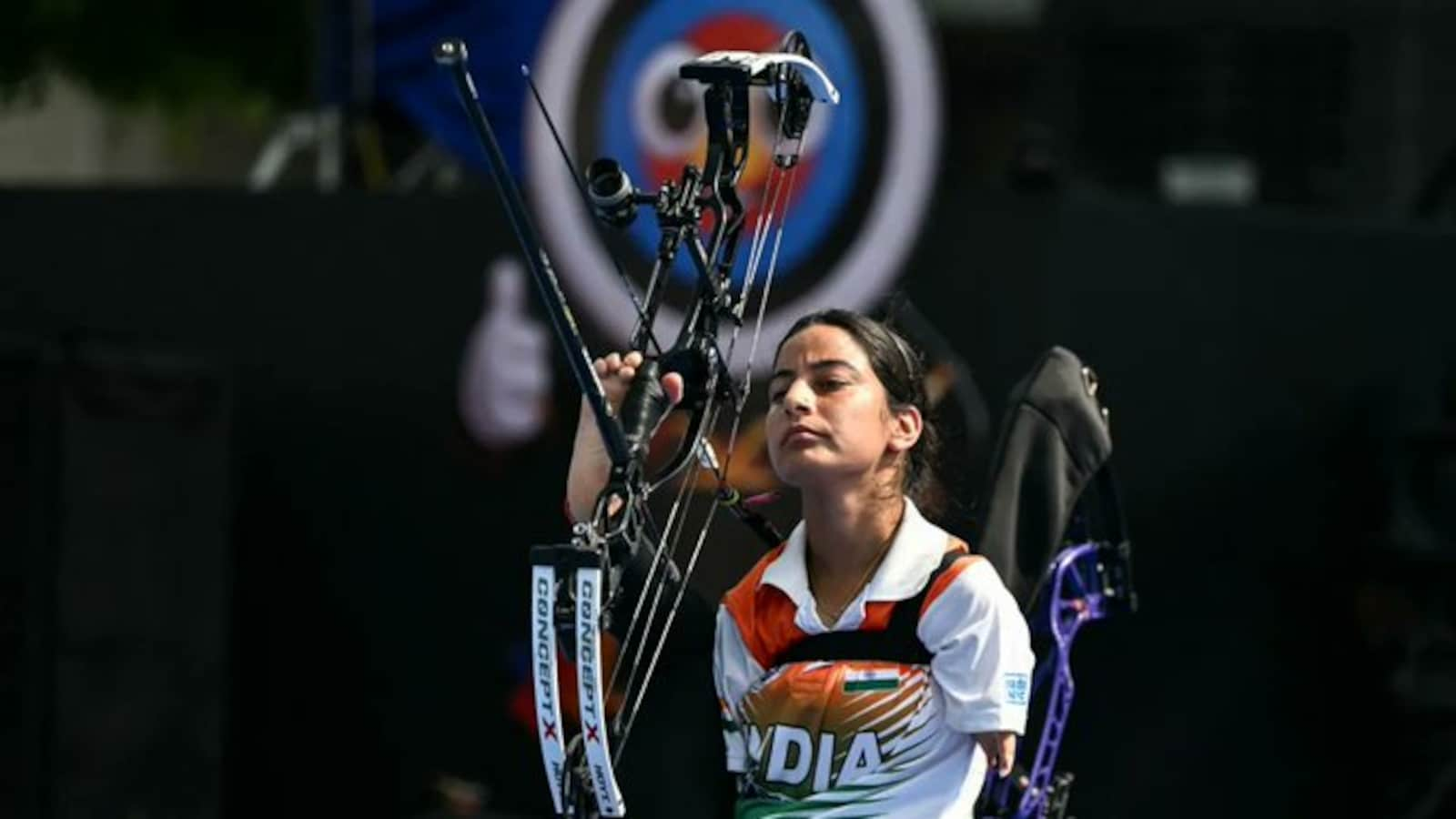
The number will be repeated for weeks: 114 medals. It is a new high-water mark for India at an Asian Para Games, and another headline-friendly milestone in what has quietly become the country's most consistent sporting story of the past decade. The delegation that came home from Aichi-Nagoya did not merely add to the tally built in Hangzhou three years ago, it surpassed it. For an ecosystem that was, until roughly ten years ago, surviving on individual stubbornness and scattered philanthropy, that is genuinely significant.
But a medal table is a lagging indicator. It reports on decisions taken years earlier: a classifier's ruling, a coach's contract renewal, a district official's willingness to sign off on a prosthetic, a family's decision not to hide a child with a disability from the neighbours. Celebrating 114 medals without asking what produced them is like applauding a harvest without ever looking at the sky.
What the Nagoya tally actually represents
India's para-sporting curve has been steep and unusually steady. At the 2014 Asian Para Games in Incheon, the contingent came back with a couple of dozen medals. By Jakarta 2018, that figure had jumped to 72. Hangzhou 2022, staged in late 2023, delivered 111. Nagoya has now pushed the ceiling higher still.
The Paralympic record mirrors the same arc. India won 19 medals at Tokyo 2020, including five golds, and then 29 at Paris 2024, including seven golds. Those are not the numbers of a country that stumbled into success. They are the numbers of a country that finally started entering athletes into events it had previously ignored, funding them with money it had previously withheld, and hiring coaches it had previously dismissed as unnecessary.
That matters because para sport is, in structural terms, a top-down discipline. Unlike mainstream athletics, where a talented teenager can be spotted by a school coach and carried upward on sheer visible potential, para athletes usually reach organised sport only through an institution that goes looking for them. A rehabilitation centre, a district association, a Para Sports Association of India talent identification camp, an NGO with a caravan. Remove that search function and the athlete simply never exists as a statistic.
The classification bottleneck nobody campaigns about
Every para medal in Nagoya was decided not only on the field but in a classification room. Para sport is divided into sport classes based on impairment type and severity so that athletes compete on reasonably equal terms, and those classes are assessed by panels of trained medical and technical classifiers.
India's problem is not that classification exists. It is that the country has historically had too few qualified classifiers, too little documentation support for athletes, and too much confusion at the entry level about which class an athlete belongs to and what evidence is required to prove it. An athlete who is misclassified or under-documented does not lose on the field; they are removed before the field.
The 114-medal haul therefore hides a quiet attrition. For every athlete who made it to Nagoya, several plausible medal prospects could have been lost in the paperwork between a district hospital and a national selection camp. Any serious assessment of the performance has to include the number of athletes India sent, not just the number who returned with metal.
Money that reaches the athlete, and money that does not
Funding for elite Indian para athletes has improved dramatically. The Target Olympic Podium Scheme has extended support to Paralympic and Asian Para Games prospects, covering coaching, foreign exposure, equipment and out-of-pocket allowances. National camps are better serviced than they were a decade ago. Several state governments now offer cash awards comparable to those for able-bodied medallists, and a handful have created jobs and land allotments as part of their reward packages.
Yet the distribution remains uneven. Kerala, Haryana, Uttar Pradesh, Rajasthan and a few others have functioning para-sport structures. Large parts of the east and northeast still produce athletes who train without a full-time coach, source their own prosthetics, and learn about selection trials through WhatsApp groups forwarded by a senior athlete.
Equipment is the sharpest illustration. A competitive racing wheelchair, a blade, a throwing frame or a tandem cycle can cost between a few lakh and well over ten lakh rupees. Add maintenance, replacement cycles, travel for repair, and the cost of training around a prosthesis that fits badly. Elite-level support covers this for the TOPS-listed few. Below that tier, families sell land.
The visibility trap
Coverage of Indian para sport follows a predictable rhythm: a burst during a major Games, a burst of congratulations, then silence until the next cycle. Sponsors behave the same way. The result is a sponsorship market concentrated on perhaps twenty athletes, most of them with Paralympic and now Asian Para Games medals, while the rest of the national pool works part-time jobs.
This has a compounding effect. A para athlete who has a job with a supportive employer can train. One who does not cannot. And because most para athletes come from households where a disability has already imposed economic strain, the opportunity cost of training is higher than it is for their able-bodied peers. Every hour on the track is an hour not spent earning.
There is also a structural asymmetry in the scholarship pipeline. District-level para events are thin, state meets are inconsistent, and school-level sport remains largely closed to children with disabilities. Talent is therefore identified late, often after the age at which a mainstream athlete would already have a decade of coaching behind them. Nagoya's medallists are, in effect, proof of what happens when late identification is combined with exceptional determination. They are also a warning about how much is being left uncaptured.
What going beyond celebration would actually mean
- A national classification cadre, with trained classifiers in every state and a clear, documented pathway for athletes to be assessed without travelling to a metro.
- Grassroots para-sport inclusion in school and district games, so that identification happens at twelve rather than twenty-two.
- Multi-year central contracts for para coaches, physiotherapists and prosthetists, not ad hoc appointments that end with each Games cycle.
- Equipment banks at the state level, allowing athletes to borrow and trial racing chairs, blades and throwing frames before committing to a purchase.
- Employment guarantees or structured job schemes linked to public-sector and corporate partnerships, so that training does not require choosing poverty.
- Independent audit of where para-sport funding is spent, from the national federation down to the district camp.
None of this is glamorous, and none of it produces a photograph of a medallist biting gold. It is the unglamorous infrastructure that separates countries which win medals consistently from countries which win them in spikes whenever a generation of exceptional individuals happens to coincide.
The athletes are carrying more than their events
What makes the Indian para movement unusual is how much of its infrastructure is still supplied by its own athletes. Senior competitors routinely mentor juniors, share contacts for prosthetic makers, negotiate with state officials on behalf of teammates, and act as unpaid classifiers-by-experience for newcomers from their home districts.
The generation that emerged from Tokyo and matured in Paris, including shooters, javelin throwers, badminton and table tennis players, archers and powerlifters, has become, by default, the movement's institutional memory. That is generous of them and structurally fragile. A system that depends on medallists to run its scouting network is a system that is not yet a system.
The 114 medals in Nagoya are one data point on a graph that has been climbing for a decade. The heavier question is what the same graph looks like at the next Asian Para Games, and whether it will be pulled up by a handful of extraordinary individuals again, or lifted by a base of thousands of children who found a coach, a classifier and a piece of equipment waiting for them when they needed it most.
Para sport remains the cheapest medal-per-rupee investment available to Indian sport, precisely because the international field, while competitive, is nowhere near saturated. The countries India now trails are not there because of larger populations or better genetics. They are there because they built the boring parts first.
Source: NDTV Sports News