

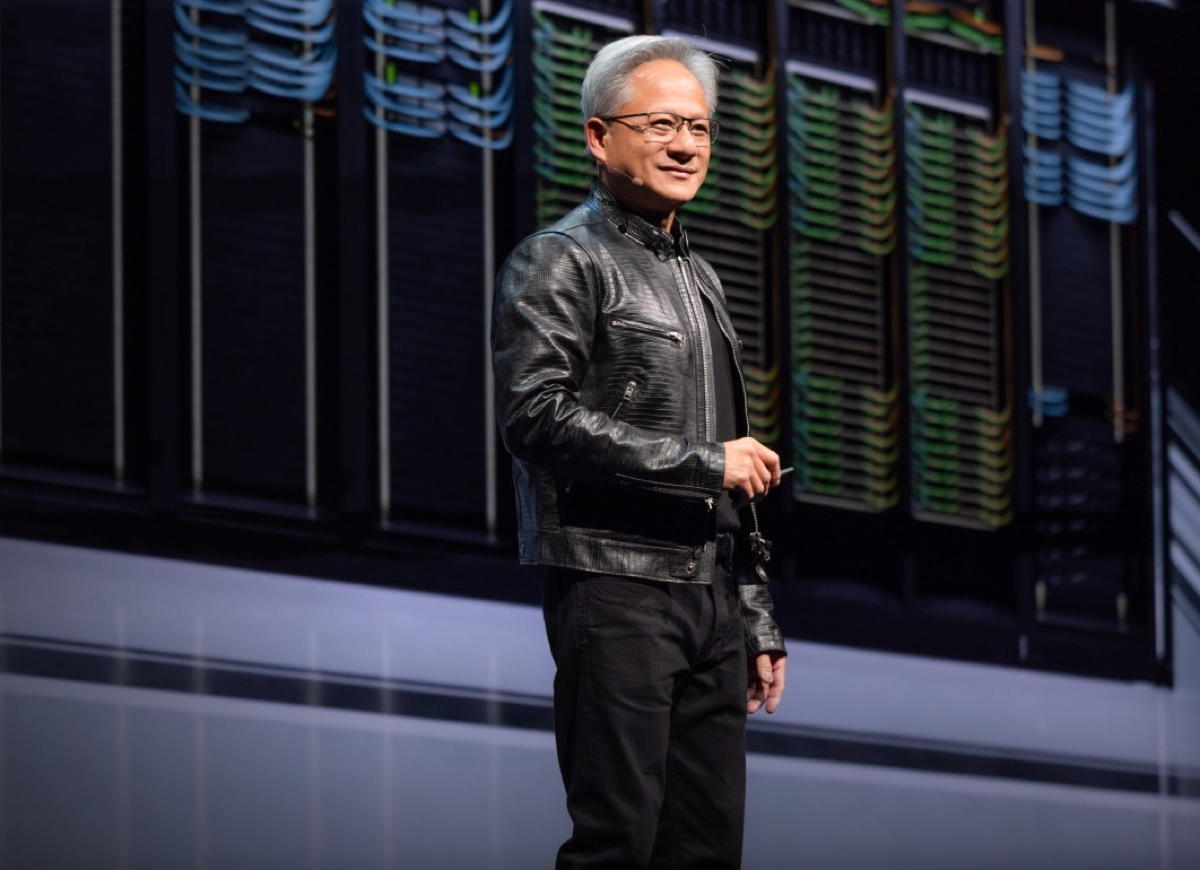
Nvidia chief executive Jensen Huang has cast doubt on the possibility of the chipmaker investing $100 billion (£75 billion) in OpenAI, the artificial intelligence startup behind ChatGPT. Speaking at a Morgan Stanley conference, Huang said the opportunity to make such a massive investment is 'probably not in the cards,' primarily due to OpenAI’s likely initial public offering (IPO) later this year. His comments come after Nvidia participated in a $30 billion funding round for OpenAI last week, a significant but far smaller sum.
'I think the opportunity to invest $100 billion in OpenAI is probably not in the cards,' Huang stated. He added that because of the expected IPO, 'this might be the last time we’ll have the opportunity to invest in a consequential company like this.' The remarks highlight a strategic shift for Nvidia, which has been deeply intertwined with OpenAI’s growth as the leading supplier of graphics processing units (GPUs) for AI training and inference.
Background on Nvidia and OpenAI
Nvidia, founded in 1993 by Jensen Huang, Chris Malachowsky, and Curtis Priem, initially focused on graphics chips for gaming but pivoted to AI and data center hardware in the mid-2010s. The company’s GPUs became essential for training large language models like OpenAI’s GPT series, fueling the generative AI boom. OpenAI, established in 2015 as a nonprofit, transitioned to a capped-profit model in 2019 and released ChatGPT in late 2022, sparking global interest in AI. The two companies have maintained a symbiotic relationship: Nvidia supplies the computational power, while OpenAI develops the software. However, that relationship has evolved as OpenAI explores building its own chips and reduces dependence on Nvidia.
In September 2024, Nvidia announced its intention to invest up to $100 billion into OpenAI over several years, with funds tied to OpenAI’s deployment of Nvidia chips in data centers. The announcement fueled market optimism, driving stock prices higher. Yet, by January 2025, reports indicated the agreement had stalled, with both sides unable to finalize terms. Huang’s recent statements effectively confirm that the mega-deal is off the table, as the economics of the AI industry have shifted.
The Changing Economics of AI
The AI sector has experienced a dramatic transformation in recent months. In 2024, exuberant announcements about massive investments in AI infrastructure were commonplace. However, the reality of building and operating large-scale data centers has introduced sobering challenges. These facilities require enormous amounts of electricity, water, and other natural resources. For example, training a single large language model can consume as much energy as hundreds of homes use in a year. Moreover, data centers often strain local power grids, leading to higher costs for residents and businesses. Environmental groups and local communities have increasingly protested new data center projects, citing ecological and social impacts.
Nvidia itself has felt the ripples of these challenges. The company’s stock, which soared in 2023 and early 2024, experienced volatility as investors questioned whether the AI hype could sustain demand for chips. While Nvidia’s revenue from data center GPUs remains strong, the company faces pressure to diversify its investments. Beyond OpenAI, Nvidia has invested in other AI startups, including Anthropic, which develops the Claude family of models. Huang revealed at the same conference that Nvidia’s recent $10 billion investment in Anthropic was also likely the last, as Anthropic also pursues an IPO.
Speculation and Market Reaction
The relationship between Nvidia and OpenAI has been a subject of intense speculation for months. Analysts and tech observers have debated whether the two companies would deepen their partnership or become competitors. OpenAI’s reported efforts to develop its own AI chips – potentially using alternative architectures like RISC-V – have added to the uncertainty. If OpenAI succeeds in reducing its reliance on Nvidia, it could significantly impact Nvidia’s dominant position in the AI hardware market.
Meanwhile, other tech giants are racing to secure supply chains and develop proprietary AI technologies. Microsoft, a major partner of OpenAI, has invested billions into the startup and integrated GPT models into its products. Google has its own Gemini models, while Amazon and Meta are also investing heavily. The competitive landscape is shifting rapidly, with each company seeking both hardware and software advantages.
Huang’s Leadership and Strategy
Jensen Huang, often called the 'godfather of AI' for his role in driving GPU adoption, has steered Nvidia through multiple market cycles. Under his leadership, Nvidia’s market capitalization grew from about $10 billion in 2015 to over $2 trillion in 2025. His decision to pull back from a $100 billion investment reflects a pragmatic assessment of risk and opportunity. Huang has emphasized that Nvidia will continue to invest in AI, but more selectively. 'We are in a business of building the infrastructure for the next industrial revolution,' Huang said in a recent interview. 'But we must do so responsibly, with a clear understanding of the market and the technology.'
The decision not to invest $100 billion in OpenAI does not mean Nvidia is abandoning the AI sector. On the contrary, the company is expanding its own product portfolio, including the Blackwell architecture designed for next-generation AI workloads. Nvidia is also focusing on software ecosystems like CUDA, which lock in customers to its hardware. Furthermore, the company is exploring opportunities in autonomous vehicles, robotics, and digital twins, areas that require massive computing power.
Implications for OpenAI and the AI Industry
For OpenAI, losing the prospect of a $100 billion investment is a setback but not a crisis. The startup has already raised substantial capital from Microsoft, venture firms, and other investors. Its valuation has soared past $80 billion, and an IPO would provide additional liquidity. However, the lack of a deep, long-term commitment from Nvidia could accelerate OpenAI’s efforts to build custom AI chips or partner with other hardware makers. This could fragment the AI hardware market and potentially reduce Nvidia’s market share over time.
The broader AI industry is at a crossroads. The initial excitement about generative AI has given way to a focus on commercial viability and scalability. Companies are grappling with high costs, regulatory scrutiny, and ethical concerns. The data center resource consumption is a growing issue, with some regions imposing moratoriums on new construction. At the same time, the demand for AI applications continues to rise, driven by sectors like healthcare, finance, and manufacturing. The balance between investment and sustainability will define the next phase of the AI revolution.
In conclusion, Huang’s remarks at the Morgan Stanley conference provide a clear signal that the era of unchecked, mega-investments in AI is waning. Nvidia, as the bellwether of the industry, is rethinking its strategy. The company will continue to be a key player, but it is no longer willing to place a single, enormous bet on one startup. Instead, it will spread its investments across multiple ventures and focus on its core competency: building the chips that power the AI world.
Source: Silicon UK News